Palm oil suffers from a bad reputation. Monoculture of palm is associated
with deforestation and the collapse of biodiversity. Indeed, huge areas have
been planted with monoculture of palm trees to meet the growing demand from
the food, cosmetic and other industries all over the world. Sumatra island
is a major spot for palm oil with large plantations but also a huge number
of smallholders and independent producers, and a complex infrastructure of
mills and refineries.
To better understand the palm issues, the
social component should not be under estimated: millions of rural households
have very significantly increased their income thanks to a commodity that is
harvested all year long and benefited so far from rather stable prices and a
secured market. Protection of the remaining forests and sustainable palm
production have to be handled in an integrated approach to ensure long
lasting impact on ecosystems and local livelihoods.
In 2021, Danone, Mars, L'Oréal and L'Occitane Group joined forces with
Livelihoods to develop an unprecedented initiative to help 2,500 smallholder
farmers achieve a sustainable transition for palm oil in Sumatra island.
Harvesting palm in the project area.
Brought together by the Livelihoods Fund for Family Farming (L3F) which
serves as the project integrator, the project has set an ambitious goal
to build a transparent and deforestation-free supply chain thanks to
three main, locally adapted components: agroforestry models,
regenerative agriculture and biodiversity enhancement.
The
project is locally implemented by Musim Mas, a
major Indonesian palm oil producer and supplier to Mars and Danone, and
SNV (entrusted project
implementer working closely with palm oil smallholders). In total, the
project is helping regenerate 4,000 hectares of palm farms in degrading
land areas, while restoring/protecting an additional 8,000 hectares of
local biodiversity over 10 years.
Three years after its launch, the project aimed at fostering low carbon
agriculture on palm and agroforestry practices in Labuhan Batu, North Sumatra,
has yielded remarkable results. During a mid-June 2024 visit to the area, which
brough together all partners of the project, the tangible benefits of these
practices on smallholder palm oil plantations were clear.
To date, the
project has successfully achieved RSPO certification for 800
independent smallholders and expanded the landscape coalition to encompass 8,000
hectares of protected state forest. This expansion aims to prevent illegal
logging, encroachment, and unauthorized land conversion via community-based
conservation management with support from the People Resources & Conservation
Foundation (PRCF).
Participant palm oil farmers have received
extensive training and individual coaching over the past three years, thanks to
a close partnership with the dedicated brands and Livelihoods teams, and engaged
in peer exchange to disseminate the learnings. Trainings, have focused on Best
Management Practices on Regenerative Agriculture, Agroforestry, Institutional
and Business Development, and Financial Literacy and were jointly performed by
SNV, Musim Mas and ICRAF (International Centre for
Research in Agroforestry).
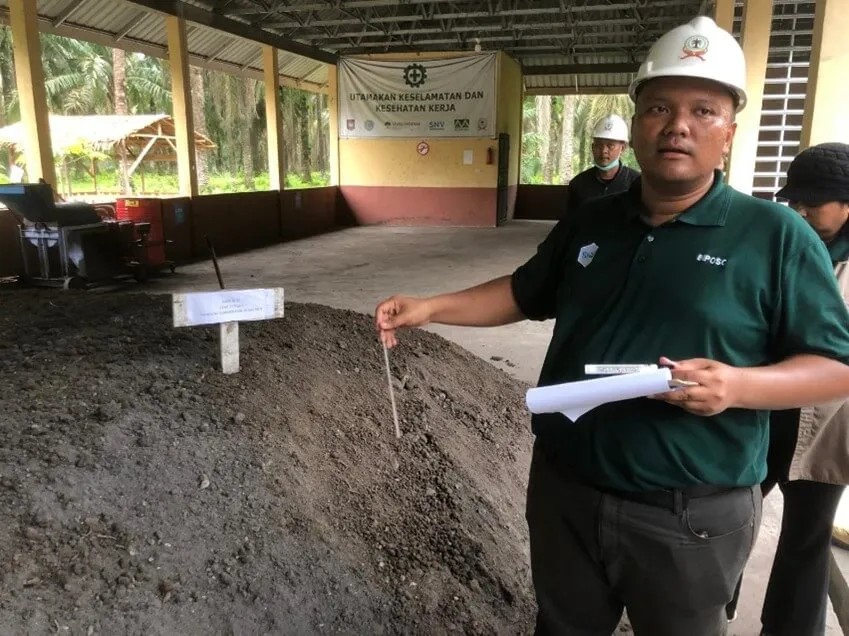
Composting unit run by the Farmer Association. So far, 1 composting
unit has been established in the project area. Operating at full
power, it has the potential to produce 100 up to 150 tons/months ,
delivering cheap and high quality organic fertilizer to farmers.
Raw material is composed of mills waste-provided by Musim Mas, and
cow manure available in intervention villages.
This intensive and proximity coaching within communities has led to a
significant rise in the adoption of sustainable agricultural practices,
increasing from 20% to between 50% and 90% over three years. Notable
improvements in soil fertility have been observed, alongside farmers' growing
enthusiasm for using affordable organic compost produced by the project.
Implemented both at community and farm levels, this compost enhances soil
quality and crop yield while strongly reducing dependence on increasingly costly
chemical fertilizers.
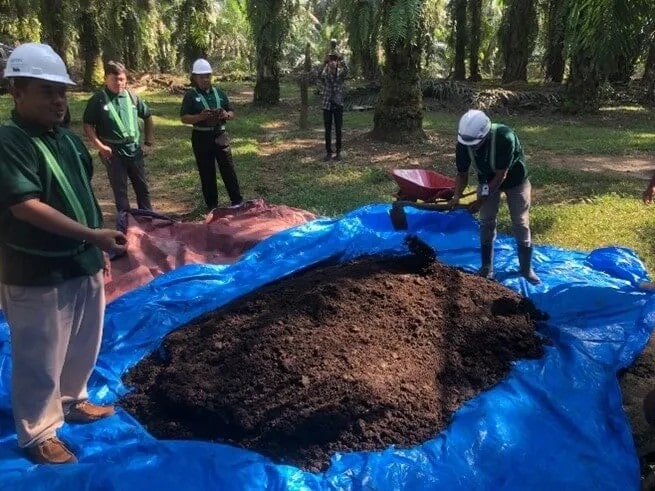
Community-based compost production at farm level, with cow manure.
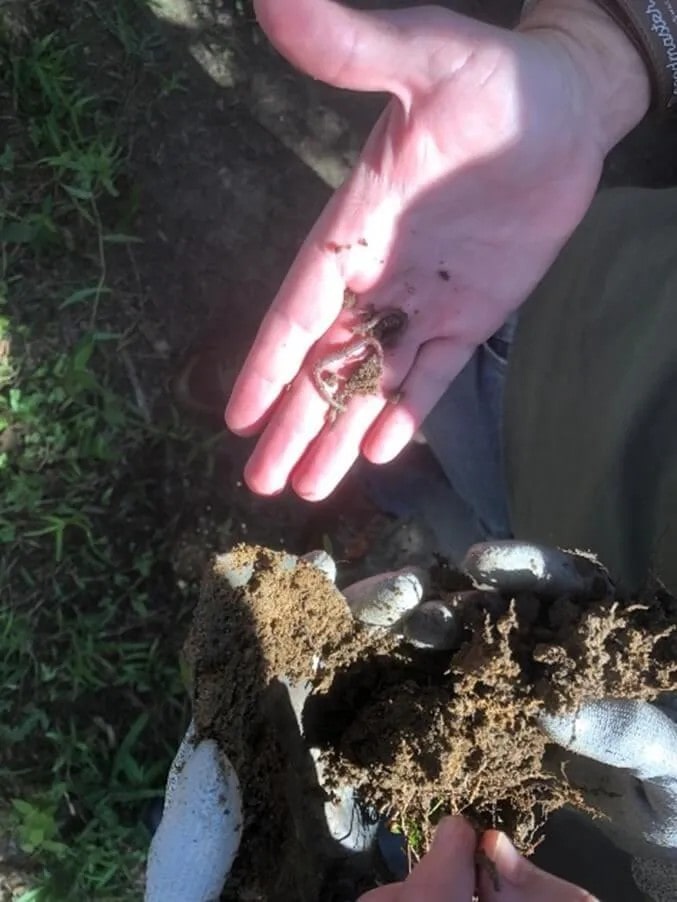
Organic fertilization through compost provides steady supply of
organic matter, leading to an increase in earthworm population and
activity. Earthworms are key in improving soil structure. Organic
matter from fertilizers helps to enhance soil aggregation and reduce
compaction, making it easier for earthworms to move through soil and
perform their ecological functions.
Moreover, the project has empowered farmers by organizing them into robust
associations. This has enhanced their organizational and business capacities,
ensuring the sustainability of ;low carbon practices and promoting long-term
success. In particular, the financial literacy courses have served as a powerful
tool for empowering women involved in the project. By equipping them with
essential financial skills and knowledge, these courses enable women to manage
their resources more effectively, make informed decisions, and strengthen their
economic independence.
Our call to action for new partners to join the project!
Currently working with 2,500 independent smallholder farmers, the project has
demonstrated success, and we have a solid economic model focused on improving soil
practices. We ambition to scale up by increasing our number of farmer participants
to 5,000 and paving the way towards a 100% green supply chain while maintaining
compliance with RSPO standards and producer transformation. To support this growth,
we are inviting other brands—beyond our current coalition of Danone, Mars, L'Oréal,
and L'Occitane—that are genuinely committed to sustainable value chain
transformations to join us.
In addition to expanding production, the project aims at restoring degraded
watershed ecosystems along riverbanks. We are seeking funding partners to
support the restoration of areas where palm oil planting is prohibited, a key
effort to ensure the local, rich-in biodiversity ecosystems are thriving, whilst
rehabilitating buffer zones via agroforestry systems which would provide
complementary revenues to smallholders.